
Genetics is the science of how traits and characteristics are passed from parents to their children. Genetics helps us understand the “blueprint” of life, explaining how every living thing gets its features from its ancestors.
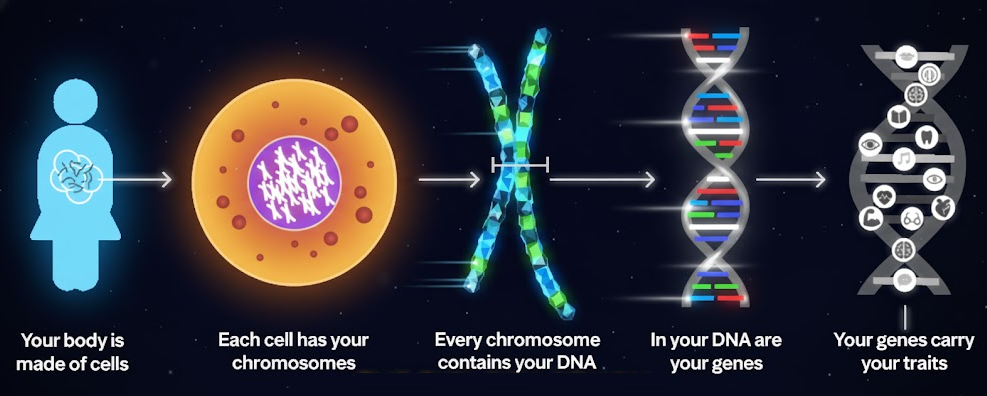
The image shows how the basic units of heredity are organised within the human body. It begins with the idea that the body is made up of countless cells. Inside each cell are structures called chromosomes, which occur in pairs and act as carriers of genetic information.
Each chromosome is made of DNA, a long, spiral-shaped molecule that contains the complete set of instructions for building and maintaining the body. Sections of DNA are called genes, and these genes determine various traits, such as eye colour, hair type, or certain abilities.
Overall, the image presents a simple sequence:
Cells → Chromosomes → DNA → Genes → Traits,
showing how hereditary information flows from the smallest units in the cell to the characteristics seen in an individual.
Genes: Genes are like tiny instruction manuals inside the DNA of every cell in your body. These instructions decide things like your eye colour and blood type. You get your genes from your parents, and they help guide how you grow and function.
Genes can be thought of as the recipes in a cookbook. Just as a cookbook contains instructions for making different dishes, genes contain instructions for building and maintaining the various parts and functions of an organism. Each gene, like a recipe, provides specific directions for creating particular proteins that are essential for the body’s structure and operations.
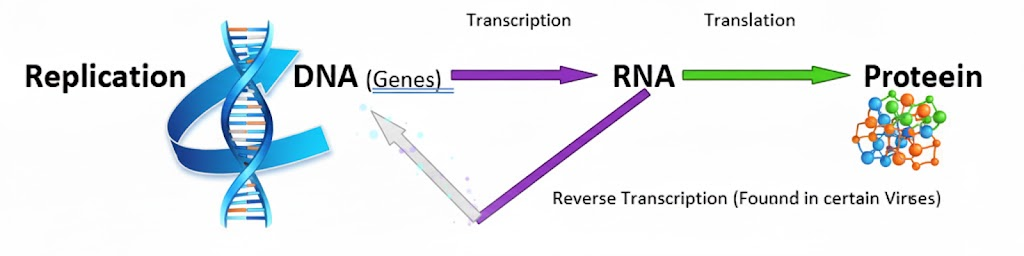
Genotype
Genotype means all the genes that make up an organism. It’s like a complete set of instructions for how the organism is built and how it works. More specifically, it can also mean the different versions of a gene, called alleles, that the organism has.
Phenotype
A phenotype is what you can see or measure in an organism, like its height, eye color, or blood type. These traits result from the combination of the organism’s genetic information (genotype) and the environment it lives in. For example, a plant’s height can depend on both its genes and how much sunlight or water it gets. So, the phenotype is the visible or measurable expression of an organism’s genes interacting with the environment.
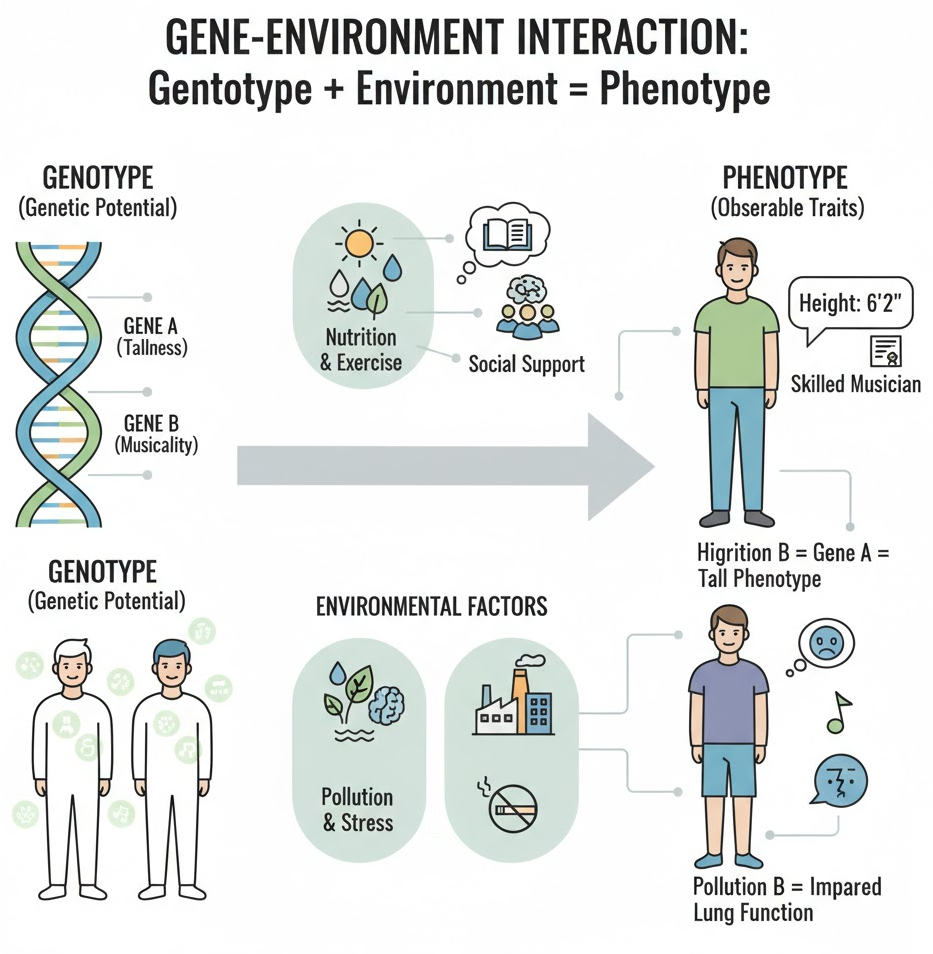
The above image explains the idea of gene–environment interaction, which means that a person’s observable traits (phenotype) arise from the combined influence of their genetic makeup (genotype) and the environment in which they live. Genes provide the basic potential for traits such as height or musical ability, but whether these potentials are fully expressed depends on environmental conditions.
Supportive environmental factors—such as good nutrition, regular exercise, and positive social support—help individuals achieve their genetic potentials, leading to outcomes like increased height or enhanced skills. On the other hand, harmful environmental influences—such as pollution, stress, or smoking—can prevent the full expression of genetic traits and may even contribute to health problems, such as reduced lung function.
Overall, the image highlights that traits are not shaped by genes alone. Instead, they result from the continuous interaction between what a person inherits and the environment they experience.
well explained